Introduction
Speaking of cotton production, India, China, and the US have been traditional leaders. But lately, a few African countries have also emerged as competitors.
These include Benin, Burkina Faso, Chad and Mali. They are popularly called C-4 and produce their version of cotton, called African cotton.
Known for its quality and texture, African cotton has quickly climbed up the rankings to become a coveted cotton variety. It has become a key player in the global textile market. But why is it so, and in what varieties is African cotton available?
This article overviews these aspects of the African cotton market and varieties for a better understanding.
The Undeniably Remarkable Quality of African Cotton
Cotton is a key element of the majority of apparel items worldwide. Hence, textile manufacturers need cotton that does justice to their consumer expectations and at the price they pay. African cotton has emerged as a variety that does precisely that.
Most of the African cotton produced is exported. This pretty much speaks for its quality. But here are a few more reasons that make African cotton a big player:
● Long Staple Length
African cotton’s long staple length translates to stronger and finer yarns. This quality contributes to the durability of fabrics and reduces their vulnerability to piling. Besides, it also makes the fabric considerably soft on the skin.
● High Absorbency
The natural fibres of African cotton are incredibly absorbent. Hence, they are comfortable to wear, particularly in warmer climates. It is also something that benefits dyeing, as it accepts colors, delivering vibrant and enduring hues.
● Resilience
African cotton fibres are inherently strong. Hence, the textiles that comprise cotton are more durable and resilient. That refers to better value for customers.
● Lustrous and Soft
This is another quality that contributes to the quick progression of cotton in the global market. African cotton has an organic Lustre and softness that most textile-makers demand. No wonder African cotton is a preferred alternative for premium apparel, textile products and luxury linens.
● Handpicked Harvesting
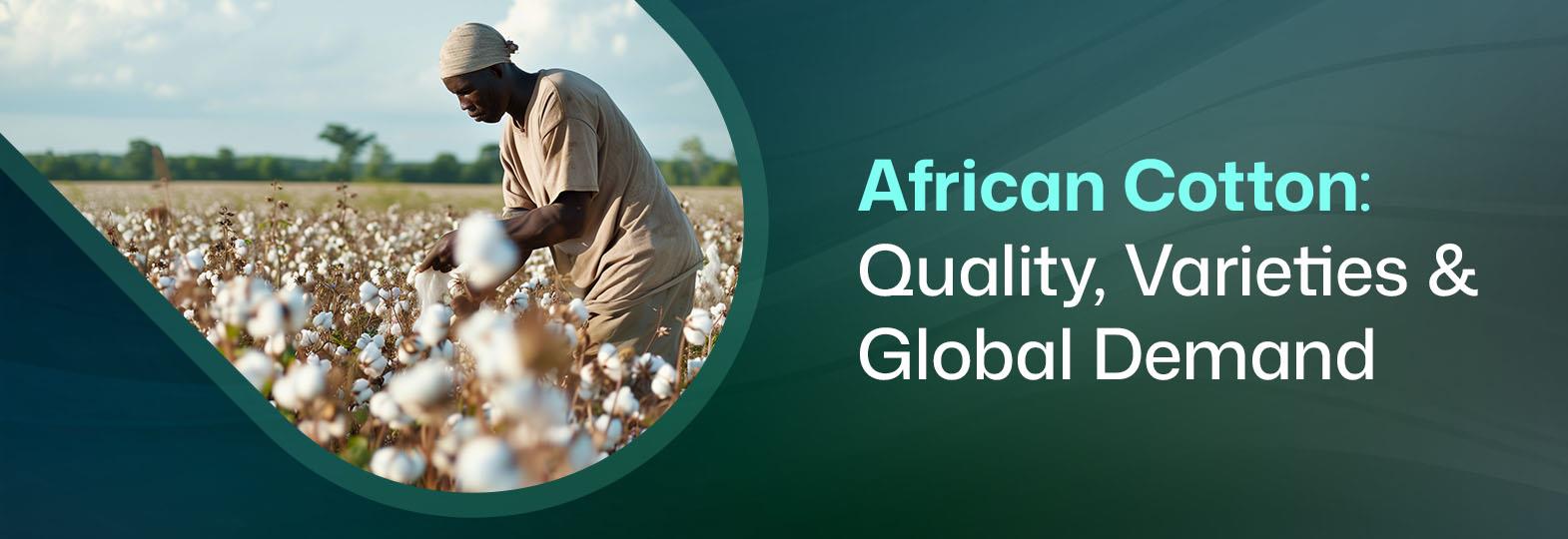
Unlike many other cotton varieties globally, the harvest of African cotton is mostly handpicked. Farmers usually don’t employ tools to gather the harvest. Instead, they meticulously pick it up, thus preserving the fiber's length and quality.
● Naturally White
African cotton doesn’t require as much bleaching as many other cotton varieties do. That makes it a more sustainable alternative and aligned with global environmental goals.
● Eco-Friendly Practices
Cotton farmers in Africa are adopting sustainable farming practices. Some initiatives in this regard include minimizing water use and using natural pest control techniques. These efforts reflect a commitment to environmental conservation, making outfits made from African cotton more appealing to conscious brands and consumers.
African Cotton Varieties – Diversity that Speaks Volumes About Demand
Diversity is another significant aspect that makes African cotton one of the most revered ones in the global textile market. Each variant is distinct in its characteristics, making it apt for apparel meant for the international market. Here are some.
● Upland Cotton
Scientifically called Gossypium hirsutum, this is the most prominent of all cotton varieties across the continent. It is versatile and has strong fibers. The most common applications include t-shirts, denim, and daily use of fabrics.
● Organic Cotton
You can find this one commonly across West African nations, including Benin, Burkina Faso, and Mali. As the name suggests, they are devoid of synthetic chemicals. Hence, the more eco-conscious brands worldwide prefer to source this type of cotton.
● Egyptian Cotton
Egyptian cotton has its unique league. It has extra-long stable fibres that produce phenomenally soft and luxurious fabrics. Hence, manufacturers that produce high-end sheets and apparel often prefer this type of cotton variety.
● Zimbabwean Cotton
This one has long, resilient, and strong fibres that help produce exceptional yarns. It has a slubby texture and can absorb indigo dye deeply.
Want to track live African cotton prices? Check the African Cotton Bremen Index on TexPro for real-time updates, historical trends, and forecasts.
The Demand for African Cotton
Although not as significant as the cotton India, China or the US produces, African cotton has a substantial demand. Africa exports almost all of the cotton it produces. It had a market value of over USD 6 billion last year. Besides, if you look at the forecasts, they seem even more promising. The market may cross the USD 9 billion mark in the next decade or so! Yet, Africa’s contribution to global cotton exports is within the 10% mark, with countries mentioned earlier leading the league.
But one cannot deny that the demand for African cotton is rising. Here’s why.
● Sustainable farming and harvesting practices
● Global quality recognition
● Elite buyers across India, China and Bangladesh
● An established place in the luxury niche for varieties like Egyptian cotton
Want the Latest Insights into African Cotton Prices and Market?
Choose TexPro, a market intelligence tool from Fibre2Fashion that lets you delve into the different varieties of African cotton and receive historical, latest and predictive insights. Request a demo to explore how TexPro works.