



20251208124546.jpg)


Introduction
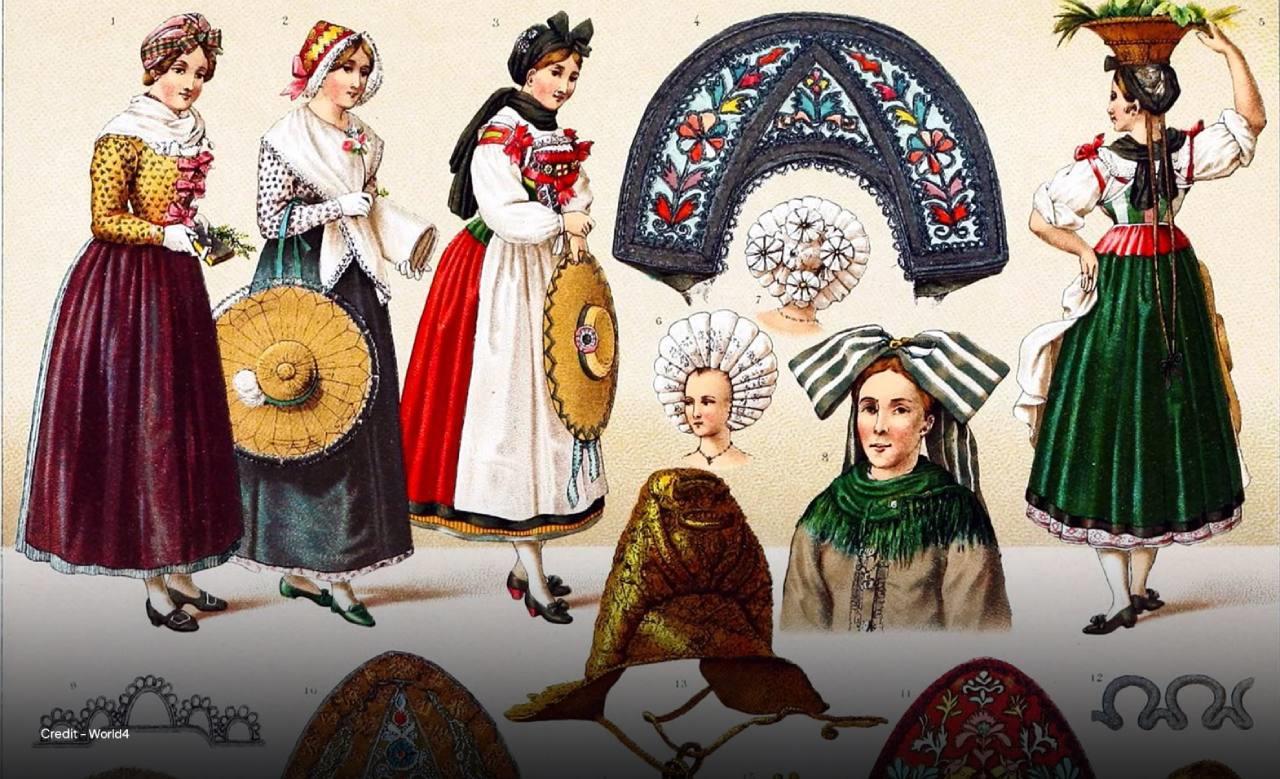
The traditional dress of Alsace is the kind of outfit that stops someone mid-scroll, mid-walk, or mid-thought. When a visitor strolls through northeastern France and suddenly sees a woman wearing a massive silky bow perched proudly atop her head like a fashion exclamation mark, they know they have arrived in Alsace. This regional attire is charming, theatrical, and packed with personality. It’s the kind of clothing that doesn’t just say “Bonjour,” it says, “I’m here, I’m iconic, and you will remember me.”
What makes the Alsace traditional dress so enchanting is how effortlessly it blends bold aesthetics with heartfelt culture. Unlike many European folk costumes that lean towards muted tones, Alsace said, “Non, merci!” and chose dramatic bows, rich fabrics, deep blacks, blazing reds, and embroidered florals that practically sing. It’s fashion with feeling that is direct, expressive, and unapologetically regional.
Beyond aesthetics, the Alsatian dress is a storyteller. Each piece, from its full skirts to its laced corsets, carries centuries of memory and meaning. And the silk bow? Well, that’s the crown jewel of a cultural masterpiece. If fashion could flirt, the Alsace dress would be leading the game.
So, lace up your corset, fluff your underskirts, and tie the biggest bow you have ever worn, as it’s time to step into the vibrant, joyful wardrobe of Alsace, France!
 The history of the Alsace traditional dress is as layered as its skirts. Rooted in the 16th and 17th centuries, its evolution was shaped by a region that bounced between French and German influence more times than anyone could count. Instead of losing its identity, Alsace stitched all these influences together and created something uniquely its own, equal parts bold, delicate, and proudly local.
In earlier centuries, clothing was used as a subtle social code. The enormous silk bow on the head wasn’t just for decoration, it signalled things like religion, marital status, and the community someone belonged to.
The 18th and 19th centuries saw the costume become increasingly theatrical. Skirts widened, corsets tightened, embroidery blossomed, and the bow grew bigger and bigger… and bigger. Tourists in the 19th century often wrote letters home describing the Alsatian women’s headpieces as “floating butterflies” or “ribbons that defy gravity.” Alsace never believed in “less is more.”
By the early 20th century, industrialisation brought modern clothing, and daily wear evolved. However, the traditional costume survived festivals, folk events, and celebrations of local identity. The region may have modernised, but its heart still beats in full skirts and large silk bows.
A fashion system where the size of the bow or the colour of ribbons spoke louder than words! Women didn’t need Instagram bios; their wardrobe did the talking for them.
Weaving Technique and Materials
 The Alsace costume may look like pure whimsy, but it’s built on serious craftsmanship.
Historically, local women relied on fabrics that were both beautiful and hard-wearing. Linen and wool were staples, while silk, especially the iconic giant bow was treasured for special occasions. Nothing says “I’m festive” like a headpiece that shines brighter than a holiday market.
The base garments were often hand-woven from local fibres. Linen was a favourite for chemises because it was breathable and survived endless wear and washing. Wool kept villagers warm during Alsace’s famously chilly winters, while cotton, when it became more accessible, added softness and colour variety that artisans couldn’t resist.
The famous silk bow, or coiffe, demanded elite craftsmanship. Artisans pleated the fabric with painstaking precision, creating a bow that sat perfectly balanced. It could not simply be folded and hoped for the best; it was engineered with the care one might give to a cathedral roof. Some designs even featured lace edging or hand-stitched motifs, adding extra character and individuality.
Embroidery played a starring role too. Floral designs, especially roses and tulips, decorated aprons and bodices, echoing Alsace’s lush countryside. Threads dyed with natural pigments added richness and depth to the clothing, making each piece a small work of art.
Even today, artisans continue these traditions. Many pieces are still handmade, using time-honoured techniques passed down through generations.
Cultural and Religious Relevance
 In a region with a long and sometimes dramatic history, the traditional attire became a badge of belonging. It wasn’t merely a dress but a cultural manifesto. Wearing the Alsace costume was a way to say, “This is who I am,” long before people expressed identity through profile pictures or hashtags.
Religion played a big part in shaping the design. Catholic communities often wore bows of specific colours on feast days or holy celebrations. Black bows were common for Sunday best or religious gatherings, while red might signal courtship, youth, or festive celebrations. The costume was like a wearable mood ring, except infinitely classier.
During weddings, the attire took on even deeper symbolism. Brides wore elaborately embroidered aprons and beautifully structured bodices, while their bows could be decorated with lace or small embellishments meant to bring good fortune. These weren’t just garments; they were blessings stitched in thread.
Culturally, the outfit helped maintain Alsatian identity during centuries of political tug-of-war between France and Germany. When borders changed, the dress stayed the same. It became a declaration of local pride, a way to preserve identity even when everything else was uncertain.
Today, the costume stands as a joyful reminder of Alsace’s resilience and spirit. Festivals, parades, and Christmas markets become stages where tradition dances back into the spotlight. And no matter how modern life becomes, the silk bow continues to flutter proudly in the wind.
 Wearing the Alsace traditional dress isn’t a five-minute affair. It’s an experience.
Step one: start with the chemise, a white linen under-garment that sets the foundation.
Step two: add the skirt, often full and pleated, giving enough volume to twirl like a joyous spinning top. Some skirts brush the ankle, others swish playfully at mid-calf, depending on the village style.
Next comes the bodice, the superstar of the outfit. It’s typically black, structured, and laced tight enough to show off the waist without sacrificing breathing rights. The bodice often features velvet, embroidery, or delicate ribbon detailing that draws the eye immediately.
Then there’s the apron, a centrepiece full of colour and character. Whether embroidered, printed, or silky smooth, it adds personality and sometimes even indicates social status or region. Aprons weren’t just practical cloth covers; they were fashion statements centuries before runways.
And of course… the bow. The grand, glorious, oversized silk bow mounted on a starched headband or cap. The bow can be black, red, floral, pastel, or richly embroidered. When tied properly, it sits like an elegant butterfly atop the head, making the wearer instantly recognisable as Alsatian. Some women say it makes them feel regal, others say it makes them feel powerful. Either way, it’s impossible to ignore.
Put all the layers together, and the result is an outfit that’s both structured and playful, traditional and theatrical. It’s not just worn; it’s celebrated.
 Alsace may be a relatively small region, but it boasts a treasure chest of costume variations. Different villages, valleys, and communities developed their own spin on the attire, making each version a cultural signature.
In northern Alsace, bows tended to be large and black, elegant, classic, and beautifully dramatic. Farther south, one might see pops of colour, brighter aprons, or detailed floral embroidery. Some areas preferred lace-edged bows, while others leaned towards minimalist silky wings. Each variation whispers its own story.
Certain towns became known for specific skirt shapes or apron patterns. For example, some communities favoured heavily pleated skirts with deep folds, while others embraced lighter fabrics and gentler silhouettes. And while the bow remains the universal superstar, its size, shape, and texture differ enough that locals can often guess where someone is from with a single glance.
Religious differences also shaped costume variations. Protestant and Catholic communities sometimes wore distinct bow colours or bodice designs, creating subtle differences that still preserved overall cohesion. It’s fashion diplomacy at its finest.
These variations aren’t just random. They reflect centuries of local pride, artisan creativity, and cultural expression. In Alsace, even the bow speaks dialect.
Famous Artisans and Places
Alsace is dotted with villages where traditional costume-making thrives like a treasured craft. Towns like Colmar, Strasbourg, and Riquewihr are famously associated with festivals where beautifully crafted outfits steal the spotlight. Walking through these places often feels like stepping into a storybook bursting with colour and culture.
Certain workshops in the region are specialised in silk-bow making for generations. These artisans hand-pleat, starch, and shape the bows with impressive skill. Some families keep old patterns, moulds, and techniques that date back over a century. For them, the bow isn’t just fabric; it’s legacy.
Embroidery ateliers across Alsace also contribute to the costume’s charm. Their floral motifs, Celtic-inspired swirls, and delicate needlework bring life to aprons and bodices. Many artisans still prefer traditional hand embroidery, believing that each stitch gives the garment a soul.
Festivals like the Fête de la Coiffe (Headpiece Festival) celebrate the region’s iconic bow and the artisans behind it. Visitors can see dozens of variations in one place, which can be resembling a glamorous garden of silk butterflies perched on proud heads.
Museums in Strasbourg and Mulhouse also house collections of historic Alsace costumes, preserving styles that are no longer worn but remain part of the region’s fashion legacy. The artistry, colour, and spirit of these pieces continue to inspire modern designers.
 Authentic Alsace costumes aren’t shy; they radiate craftsmanship.
- The first clue is the fabric quality. Original garments feature wool, linen, velvet, or high-grade silk, and never cheap synthetics pretending to be the real deal. If the bow feels flimsy or too shiny, it’s probably a low-cost replica.
- The iconic silk bow itself is a major authenticity checkpoint. True traditional bows are pleated and structured by hand, not mass-produced by machines. One can notice tiny imperfections, the kind that prove a human hand shaped it with patience. The bow should sit firm and balanced, not droopy or overly rigid.
- Embroidery is another tell-tale sign. Authentic embroidery is intricate, textured, and slightly varied, because a needle, not a printer, did the job. Floral motifs should look natural and vibrant, with thread colours that complement the outfit instead of clashing like cheap tourist costumes often do.
- The construction of the bodice is also a giveaway. Originals are sturdily reinforced and intricately laced, with material thickness that supports the garment’s shape. If the bodice feels floppy or overly stretchy, it’s likely a modern imitation.
Finally, authentic costumes carry a certain presence, an elegance impossible to fake. True Alsace attire feels like history in motion, not a costume-party accessory.
%20(1)20251211140147.jpg)


Comments