




20251208124546.jpg)


Introduction
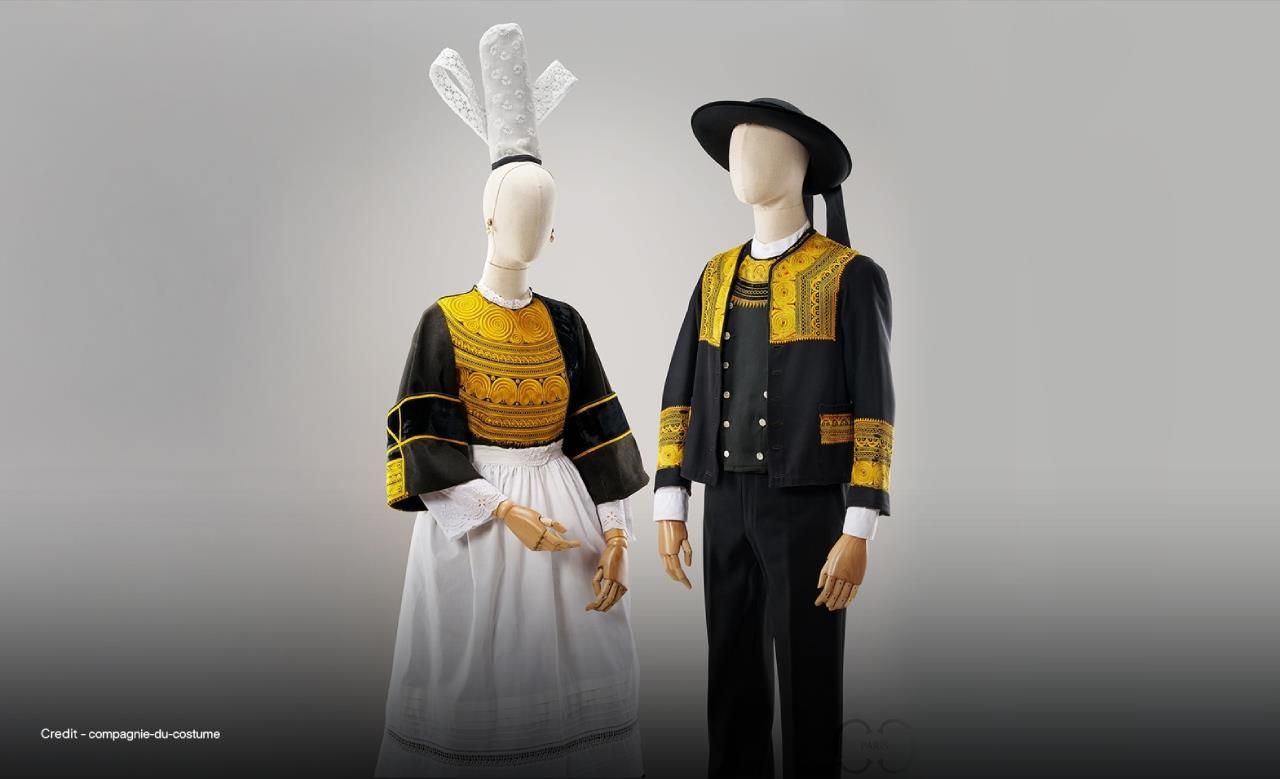
Breton costumes are a personality. It’s the salty sea breeze stitched into fabric, the beat of folk drums woven into lace, and the fierce pride of Brittany wrapped around generations. When one sees the iconic stripes or the cloud-like lace coifs, it feels as though they have stepped into a postcard where tradition meets the Atlantic winds.
This attire has long been a symbol of Brittany’s identity; distinct, proud, and delightfully charming. Even today, whether at festivals, dances, or regional celebrations, one can spot locals wearing it with the same warmth and sparkle that has kept it alive for centuries.
Breton costume celebrates craftsmanship, family heritage, and the unique cultural heartbeat of western France. It’s wearable storytelling, every stripe, frill, and pin has something to say. And once the story is learned, one will never look at a striped shirt the same way again.
So, buckle up because we are diving into one of Europe’s most magical wardrobes!
 The history of the Breton costume reads like a fashion saga with sea spray and folklore sprinkled on top. Its roots stretch back to the Middle Ages, where rural communities across Brittany developed their own distinct clothing traditions. Villages weren’t just separated by geography, they were separated by style, pattern, and even the height of one’s coif!
In earlier centuries, Breton attire served as a practical marker of identity. Whether someone was a fisherman, a farmer’s daughter, or part of the local nobility, their clothing revealed their place in society. Designs varied not only by village but also by marital status, special occasions, or mourning periods. Yes, Brittany mastered the “outfit for every mood” concept long before Instagram.
By the 19th century, the costume reached peak flamboyance. Coifs grew taller, embroidery grew richer, and the regional variations became so specific that locals could instantly tell where someone came from just by glancing at their outfit.
Today, while everyday Breton dress has modernised, the historical costume thrives in festivals, folkloric events, and cultural celebrations, keeping alive a fashion tradition that refuses to fade into history.
Weaving Technique and Materials
 Breton costume is a love letter to craftsmanship. The fabrics traditionally used are linen, wool, and later cotton. These were chosen not just for comfort but for durability against Brittany’s famously moody weather. When a region is regularly blasted by Atlantic winds, practicality becomes an art form.
Wool was often hand-spun locally and dyed using plants and minerals sourced from nearby fields and forests; artisanal dyes long before ‘eco-friendly boutique’ became a selling point. Linen, a regional favourite, was prized for being cool, breathable, and strong, perfect for long days of work or dancing at local Pardons (religious festivals).
Many decorative elements, especially lace and embroidery, were hand-crafted by local women who passed techniques down through generations. Some lace styles were so complex they were practically engineering feats: fine, delicate, and utterly mesmerising when the light caught them.
Today, while machine-made fabrics exist, many artisans still honour traditional weaving and lace-making methods. It’s more than clothing; it’s artisanal legacy woven one thread at a time.
Cultural and Religious Relevance
 In Brittany, wearing the traditional costume isn’t just about fashion; it’s an act of heritage, identity, and spiritual significance. Many of the clothing elements originally connected to Catholic traditions, especially during ceremonies, pilgrimages, and Pardons. The attire helped mark sacred occasions and symbolised purity, respect, and community pride.
The lace coif, for example, wasn’t merely decorative; it often indicated a woman’s marital status or the nature of the religious event she was attending. Subtle differences in embroidery or lace thickness could carry their own language, understood instinctively within the community.
Cultural ties are equally strong. Breton costume reflects the region’s deep Celtic roots and its centuries-long desire to preserve its own distinct identity, separate from broader French fashion trends. While Paris might have ruled the runways, Brittany ruled its cultural heartbeat.
Even today, wearing the costume during festivals isn’t about nostalgia. It’s about pride, a statement that Brittany’s spirit is alive, vibrant, and fiercely local.
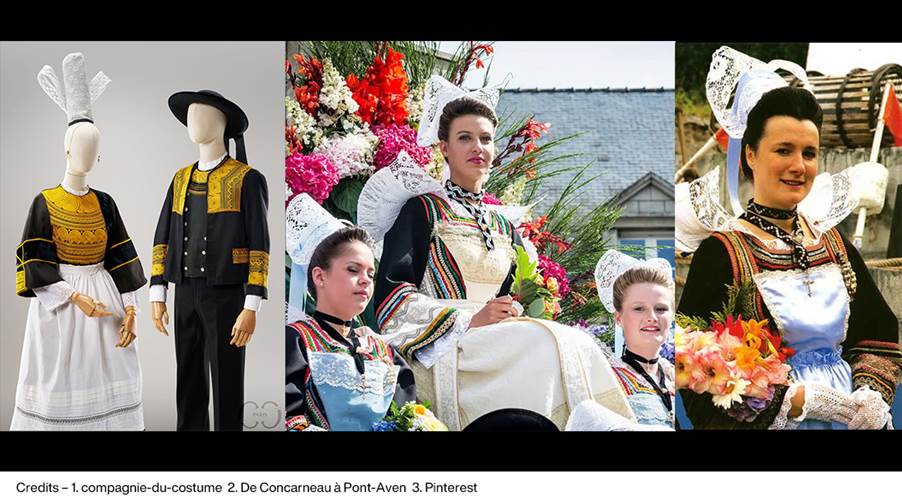
- Putting on a Breton costume is like assembling a piece of living art.
- The striped shirt now iconic worldwide was originally a sailor’s uniform, designed to make men more visible if they fell overboard. Stylish and practical, the Breton motto.
- Women traditionally wore layered skirts, aprons, embroidered bodices, and of course the star of the show: the lace coif. Depending on the region, coifs could be tiny and sweet or towering architectural wonders that defied gravity and logic. Wearing a high coif required skill, patience, and excellent posture.
- Men’s attire often included wide trousers, fitted vests, and sturdy boots. The outfits were durable enough for tough seaside work, yet polished enough for Sunday gatherings. In full costume, a Breton man looks as though he had stepped straight out of a heroic seafaring legend.
- Whether worn at festivals or passed down for family portraits, each piece is carefully arranged, respecting centuries-old techniques. No shortcuts, tradition demands the real deal.
 Here’s where things get wonderfully chaotic. Brittany doesn’t have one traditional costume, it has over 60 regional variations. Imagine a single region with enough unique fashions to rival an entire designer lineup.
Some areas, like Pont-Aven and Quimper, are known for bright colours and detailed embroidery. Others, like Bigouden, are famous for their dramatic, sky-high lace coifs, some reaching up to 30 cm tall, making them the runway supermodels of Breton headwear.
In contrast, areas like Vannes opt for simpler silhouettes, focusing on subtle details and elegant lacework. Each region’s attire tells its own local story, shaped by history, environment, and community pride. These variations are a treasure hunt for culture lovers. Every village costume has personality: playful, modest, extravagant, or bold. It’s fashion anthropology at its finest.
 Several towns in Brittany have become synonymous with traditional costume craftsmanship. Pont-l’Abbe, for instance, is a legendary centre for lace making. Its artisans are known for techniques that have been perfected over centuries. If lace had celebrities, these artisans would be the A-list.
Quimper is another hotspot, famed not only for its pottery but also its rich embroidery traditions. Artisans here specialise in colourful, elaborate designs inspired by floral, Celtic, and maritime motifs.
Then there are local family workshops, some operating for generations that continue producing traditional attire for festivals, weddings, and historical events. Visiting one of these workshops feels like stepping into a time capsule filled with fabrics, threads, and stories.
Breton museums, especially in Finistere and Morbihan, also preserve and showcase iconic costumes that highlight the region’s extraordinary craftsmanship.
 Authentic Breton costumes have a distinct personality that mass-produced replicas simply can’t fake.
- The first giveaway? The craftsmanship. Genuine pieces are hand-stitched, often with visible but refined detailing that reflects hours and sometimes days of careful work.
- Original coifs are made from delicate lace crafted using traditional needle or bobbin techniques. Machine lace looks too uniform. Handmade lace has that beautiful, human imperfection that makes it special.
- Embroidery on authentic garments usually features natural motifs such as flowers, wheat, vines, Celtic spirals, stitched thoughtfully and not printed or replicated mechanically. The colours may also be slightly muted, as natural dyes were commonly used.
- Lastly, the structure of the costume itself. Layered skirts, specific cuts, and region-specific shapes help identifying an original. If it looks too “costume party,” it’s probably not the real deal.
- Authentic Breton attire has an unmistakable elegance and quiet authority.
 (1)20251211140147.jpg)


Comments