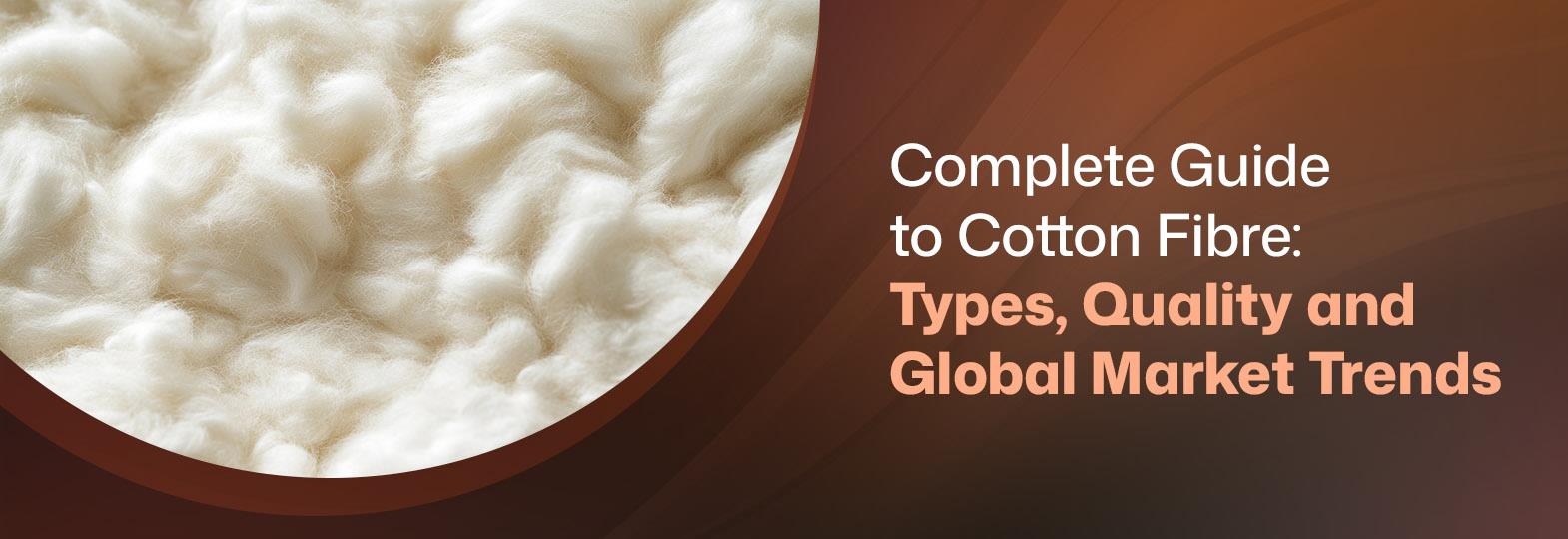
Cotton, for centuries, has been an integral fibre of most of the outfits the world wears. It's not just a fabric but also the lifeline of many economies.
Cotton is also a rapidly evolving commodity thriving in a highly dynamic marketplace.
Here’s a guide that discusses the types, quality and global market trends of cotton fibre.
Types of Cotton Fibre
Cotton fibre types significantly depend on their origin. Each fibre has its distinct properties and applications. However, some common ones include;
1. Pima Cotton
Also interchangeably called extra-long staple (ELS) cotton, although Pima cotton is just a type. It is known for its long fibres, making it stronger and more enduring than other cotton types.
But the length alone doesn’t make Pima popular. Its softness makes it apt for premium bedding and clothing.
Another popular variety of ELS cotton is Egyptian cotton. It is soft and durable. It is used in products like luxury bedding and clothing.
2. Upland Cotton
Upland cotton is the most widely grown variety worldwide.
Upland cotton is famous for its high yield. Therefore, it is responsible for a majority of the cotton production worldwide.
3. Organic Cotton
Organic cotton is called so because it is cultivated without using any synthetic fertilisers or pesticides. Therefore, it is more sustainable and finds its use in products usually marketed or labelled as eco-friendly or green.
4. BT Cotton
This is one of the types of genetically modified (GM) cotton. It is engineered to include a gene from Bacillus thuringiensis (BT), a bacterium. The gene produces a toxin that eliminates certain pests, like the bollworm, that thrive on cotton plants.
5. BCI Cotton
BCI in this case means the Better Cotton Initiative. It is a sustainable cotton cultivated with fewer pesticides and more eco-friendly, i.e. water-efficient methods. It is helping reduce the environmental impact of cotton production.
6. Supima Cotton
This is the US’s extra-long staple cotton, also known as American Pima cotton. It is also one of the finest cotton types in the world. Known for its softness, strength and colour retention abilities, this cotton type is in colossal demand worldwide.
What Determines the Quality of Cotton Fibre?
Many factors. Here are some crucial ones.
1. Genetic Factors
The inherent genetic traits of cotton varieties influence the fibre properties like length and strength. While some are long, a few others are extra-long and stronger.
2. Water and Nutrition
Fulfilling cotton’s nutritional requirements and water needs also play a critical role in the quality of fibre produced.
3. Weather Conditions
Extreme weather like torrential rainfall or prolonged cloud cover can impact fibre quality. Cotton grows in warm climate and temperatures between 21-30°C.
4. Sunlight
Like every other crop, cotton also requires adequate sunlight to promote photosynthesis. It is an essential process for the concentration of carbohydrates that play a crucial role in the growth and development of cotton fibres.
5. Harvesting Method
Handpicked cotton is often considered to be of a higher quality; hand-harvesting helps retain fibres. On the other hand, machine-picked cotton usually has higher trash content that demands extensive cleaning, potentially damaging the fibres.
6. Measured Quality Parameters
Some of these also include:
- Fibre Length: Longer fibres generate smoother and softer yarn
- Fibre Strength: Stronger fibres are more durable and produce stronger yarns
- Colour: Better quality cotton is brighter and whiter
- Length Uniformity: Uniformity ensures fibres are similar in length
- Balanced Micronaire: It refers to a fibre’s thickness and maturity.
Global Cotton Market Trends
Cotton is a global commodity traded in billions in terms of money and quantity. But it isn’t immune to the market’s dynamics. Instead, it is responsive to everything from weather vagaries to global demand and supply. Precisely, events or situations like these shape trends. Here are some of them.
- Sustainability: Increasing concerns over the massive use of pesticides and water are driving organic and responsible cotton into the mainstream cotton economy.
- Rise of African Cotton: Although not as substantial in demand as India, China or the US’s cotton is, African cotton is by no means a small player. It is growing with every passing day, and particularly in demand from mills in India, Bangladesh and Vietnam.
- Tech Advancements: From the pest-resistant GM cotton to AI-driven farming, technology is transforming the way the world produces cotton. The purpose is to foster higher yields while minimising the environmental impact.
- Synthetic Competition: This has been around for decades. Synthetic fibres are cheaper and have distinct performance characteristics. Yet, cotton’s demand remains unperturbed. Thanks to its natural appeal and breathability.
Need the latest insights into different cotton varieties worldwide? Join TexPro, a comprehensive market intelligence platform, Fibre2Fashion. From historical numbers to the latest and predictive analytical insights, TexPro offers it all.