




20251208124546.jpg)

In the textile industry, the every-day reality is that how a fabric feels to the consumer often determines whether it sells or languishes. Yet that very ‘feel’ has long been measured using human hand-panels, relying on experts’ fingers and impressions. These methods, while familiar, are slow, subjective and hard to standardise across geographies, suppliers and production sites.
In the recent study, presented on the 11th INTERNATIONAL TEXTILE, CLOTHING & DESIGN CONFERENCE – Magic World of Textiles from October 6th to 9th in 2024 in Dubrovnik, Croatia1, it was explored how objective instrumentation could replace or strongly complement traditional sensory panels by delivering reliable measurements of haptic properties in textiles. In the following text we present how the TSA Tactile Sensation Analyzer makes that transition from subjective to digital possible, and why that matters for manufacturers, converters and brands who aim for consistent quality, efficient production and traceable data.

From Feeling to Numbers: What the Study Shows
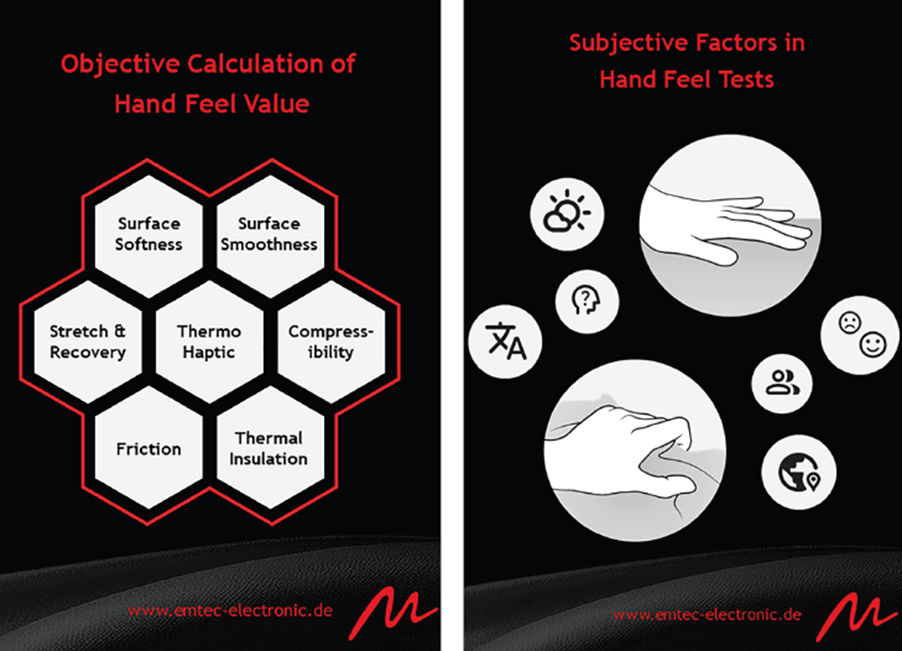
In the experiment was assessed a range of 24 fabric samples differing in finishing, coating and base-structure, comparing human panel ratings of surface softness, surface smoothness and stretch & recovery with measurements obtained via the device. The data confirmed strong correlation between the TSA hand-feel value and the human panel rankings (in line with previously published work), thus validating the instrument’s ability to faithfully simulate human tactile perception. For example, fabrics with higher ‘TS7’ sound peaks (micro-surface vibration) corresponded to panels reporting ‘less soft’, and deformation-based stiffness metrics aligned with perceived rigidity. The study demonstrated that within minutes the TSA delivers reliable values for surface softness, surface smoothness, stretch & recovery, thermal insulation and haptic, compressibility, friction and crumple resistance—metrics that human panels cannot isolate individually.
Crucially, these numeric values are reproducible, archivable and comparable across production batches and locations. Where human panels introduce variability by mood, culture, individual sensitivity or ambient conditions, the objective test method showed that the TSA removes those confounding factors and offers consistent output.
Why Measuring Objectively and Digitizing Haptics Matters in the Modern Textile Industry
1. Production-quality Alignment Across Sites
Globalised textile supply chains often involve raw material suppliers as well as production sites and finishing across different countries. Keeping a consistent ‘hand-feel’ across sites is challenging if each unit relies on hand tests done locally. The TSA enables identical measurement protocols at every site, allowing a brand and its supply chain to define objective target values for the individual haptic quality parameters, such as surface softness, surface smoothness, stretch or recovery and demand compliance with those. This ensures that a fabric produced in one country will feel the same as one produced elsewhere, enhancing brand coherence and reducing deviations.
2. Quality Assurance and Incoming Control
Issues with the haptic quality of fabrics are often detected very late in the process. Sometimes it needs the consumer’s purchase decision for brands to realise that something is not right, and at the end whole collections have to be thrown away.
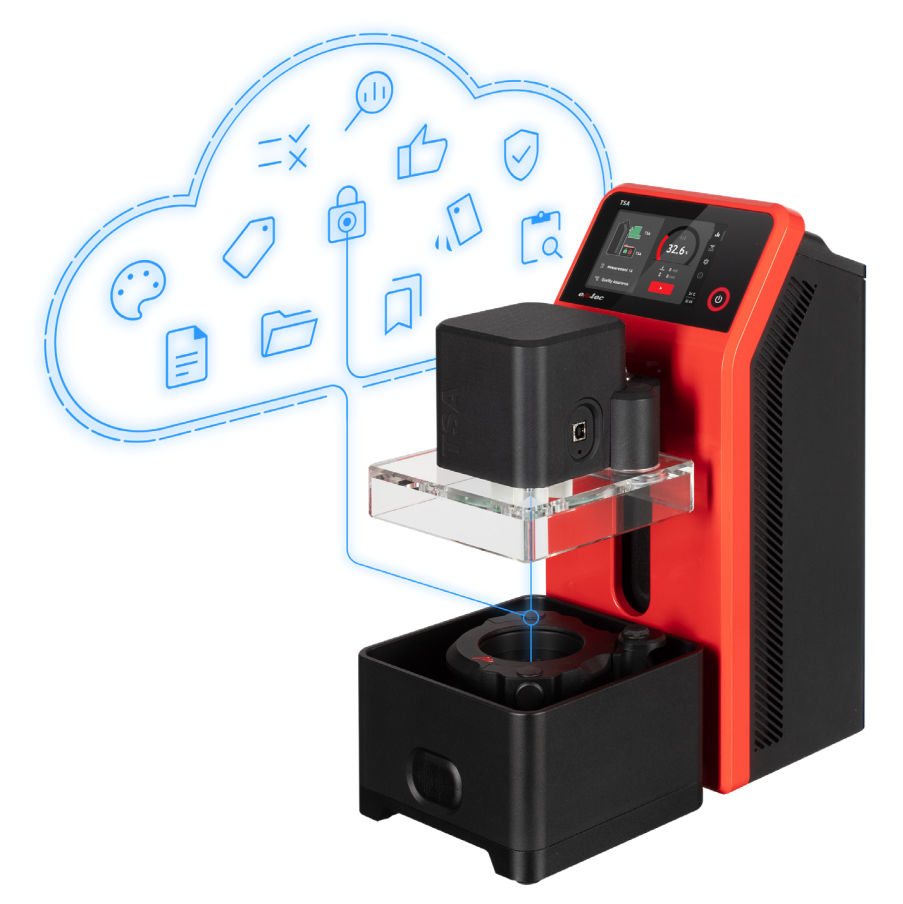
With the emtec TSA Tactile Sensation Analyzer and the cloud-based Virtual Haptic Library—the platform to digitally communicate the objectively measured values—these issues are solved. TSA tests are done frequently, every hour for example, and the results are transferred to the haptic cloud instantly. In case the measured values for the individual haptic quality parameters, objectively determined by the TSA, fall out of the agreed specifications, the cloud sends a short message or email to the responsible people. This enables a fast reaction to the possible issues in the production process. Being able to react to issues with the haptic quality so early in the process helps to:
- avoid the waste of resources
- save time and money
- provide the desired haptic quality at any time
- lower the ecological impact of the textile industry.
3. Digitizing Haptics for Traceability and Benchmarking
The TSA’s output can be exported, integrated into quality-management systems, and stored in cloud-based libraries. This means companies build up searchable hand-feel databases. Over time, this allows benchmarking of coatings, finishes, additives, fibre blends and machine settings. This enables brands to understand and provide, what consumers expect.
4. Faster Time-to-Market and Fewer Sensory Regressions
Replacing or supplementing hand-panel tests means decisions can be made faster: new treatments can be screened within hours rather than days, full production runs can be monitored in real time, and deviations detected before entire lots are produced. This agility reduces the risk of launching a collection with inconsistent feel or having to pull product from the market.

Putting the TSA into Action: Key Benefits for Textile Professionals
- Objective Hand-feel Values: The TSA breaks down the tactile impression into surface softness (micro-surface vibration), surface smoothness/roughness (macro-surface vibration), stretch and recovery, friction, compressibility and crumple resistance—parameters that human panels cannot separately quantify. From the individually measured parameters, so-called hand-feel values can be calculated.
- Highly Reproducible and Correlating with Human Perception: Independent studies and industry tests indicate that TSA values align strongly with panel ratings within the same class of fabrics, making the device a trustworthy surrogate for subjective measurement.
- Rapid Measurement Turnaround: Within minutes a sample’s haptic profile is measured, compared with panels that may require days of preparation and consensus.
- Digital Archives and Remote Benchmarking: Measurement results can feed into the Virtual Haptic Library or similar cloud-based platforms, enabling remote quality assurance, supplier audits, benchmarking and supply-chain transparency.
- Scalable Across Materials and Applications: Whether textiles, nonwovens or even tissue papers, the TSA’s methodology applies broadly, making it valuable for multi-material manufacturers and converters.
A Word on Digitalization and Future Readiness
In a landscape increasingly shaped by Industry 4.0, smart factories, digital twins and supply-chain transparency, tactile quality cannot remain a ‘human alone’ evaluation. The TSA situates haptics squarely in the digital realm: numeric values, dashboards, remote access, trending and alerts. For example, through real-time monitoring a production line can register a shift in the stretch and recovery of fabric, trigger an alert, and a remote team can decide by the help of the data, whether anything has to be adjusted before a whole roll goes out. Such proactive quality control prevents waste, aligns KPIs and embeds haptics into the same digital ecosystem as strength, colour and dimension.


 (1)20251211140147.jpg)



Comments