Highlights
2025 saw high volatility in cotton prices due to weak demand, tariffs, and overproduction.
Global trade is recovering in 2025/26, with India and Brazil emerging as key players.
2025/26 is set to be more conducive to the cotton trade, even with US tariffs playing spoiler, as countries like Bangladesh and Vietnam ramp up imports.
2025/26 is set to see less cotton production but more consumption and mill use, leading to less overproduction
Cotton is the cornerstone of the textile world, by far the material most in use for apparel around the world. Gleaning out trends in the cotton trade, whether they be about prices, import-export, or production, is important for cotton traders for strategic decision-making and future plans.
2025: A Tumultuous Year
2025 has been a notable year in the cotton industry. As the impact of climate change nudges producers towards more sustainable practices, as well as organic cotton, they have had to adapt fast.
2025 has also been the year of tariffs. Increasing levy of tariffs by the US government on countries like India and China has transformed the cotton industry in 2025, not to mention making cotton trade the stuff of headline news.
The levying of tariffs has profoundly changed the way cotton business will be done going forward. With the international trade scenario precarious, the next year is set to see more importance being given to domestic cotton trade.
Global Production Snapshot: 2024/25 vs. 25/26
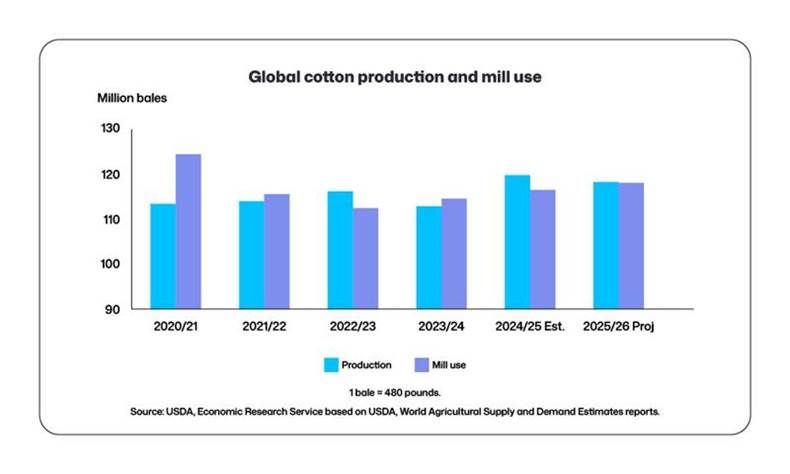
Cotton production in 2025/26 is set to be lower than that of 2024/25. The USDA predicts cotton production of 118.4 million bales in 2025/26; a 1.5 million bales decrease compared to 2024/25.
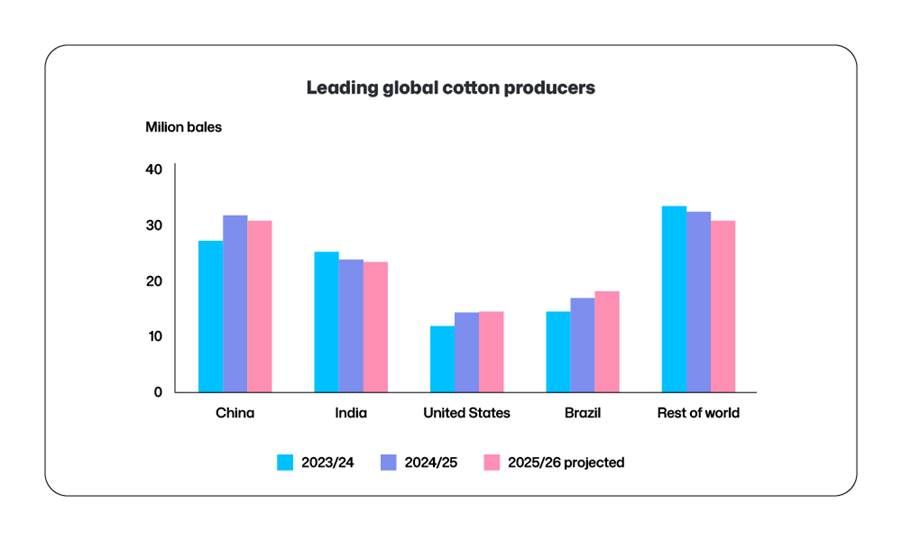
This decrease in production is mainly due to predicted decrease in China (the biggest producer) and Australia. However, the damage is set to be limited somewhat by predicted increases in the United States (slight) and Brazil (major).
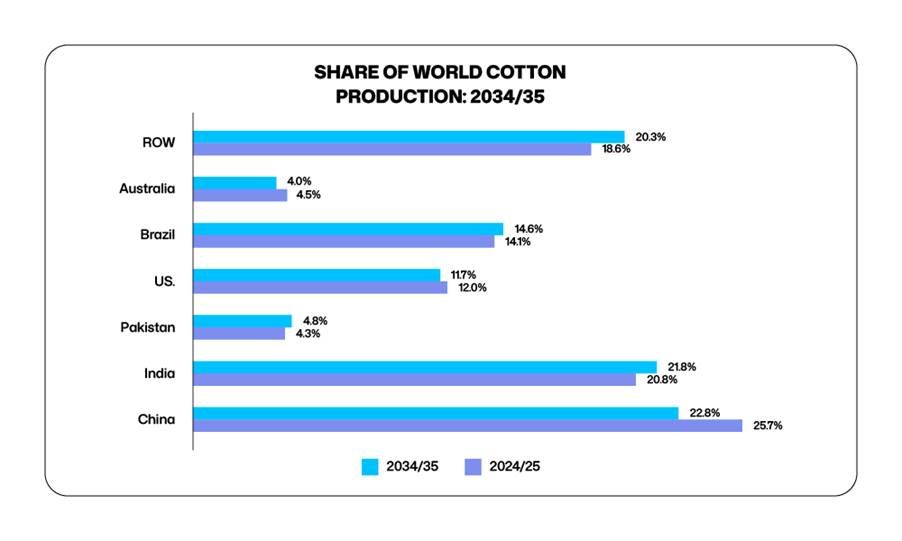
Cotton production worldwide is concentrated in a few countries, with China, India, the United States, and Brazil being the chief among them. These four countries are set to account for 74% of the world's cotton production in 2025/26, up 1% from the previous year.
China is the undisputed leader, with 26% of total production predicted, but production is set to decline. 31 million bales are forecasted for 2025/26, down 1 million bales from the previous year.
(Source: USDA)
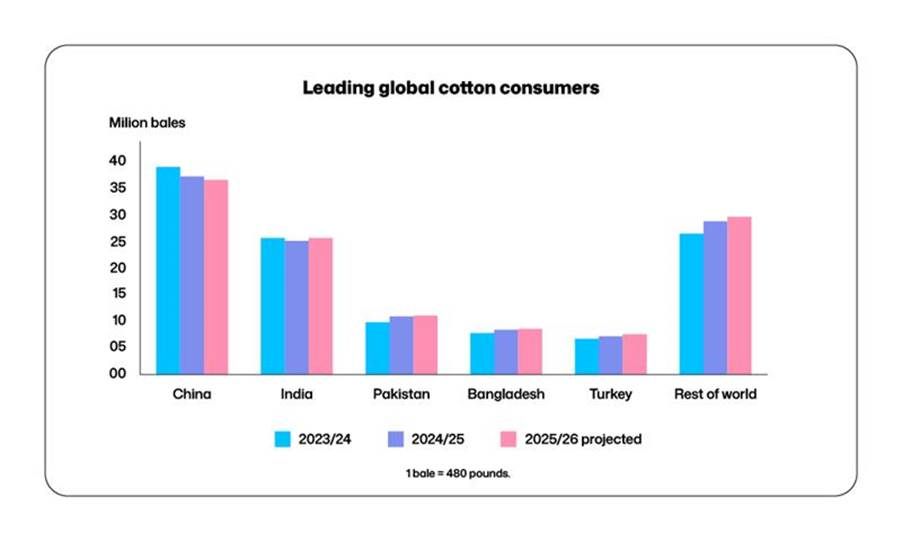
In contrast, consumption of cotton is set to increase globally. World cotton mill use is estimated to be 118.1 million bales in 2025/26, just slightly below the total production number. This is an increase of 1.4 million bales over the previous year.
While cotton consumption too is set to decrease in China, the rest of the world is by contrast set to see a considerable uptick in cotton mill use.
Global Cotton Trade in 2025/26: Positive Signals
Despite the havoc caused by tariffs, global cotton trade is set to prosper in the rest of the year. 44.7 million cotton bales are set to be traded globally, an increase of 1.7 million bales over the last year.
Major countries are set to see increased cotton exports. For instance, the United States’ cotton exports are set to increase by 6% over 2024/25. This increase is helped along by increased trade with countries other than China, a pattern already noticed in 2024/25.
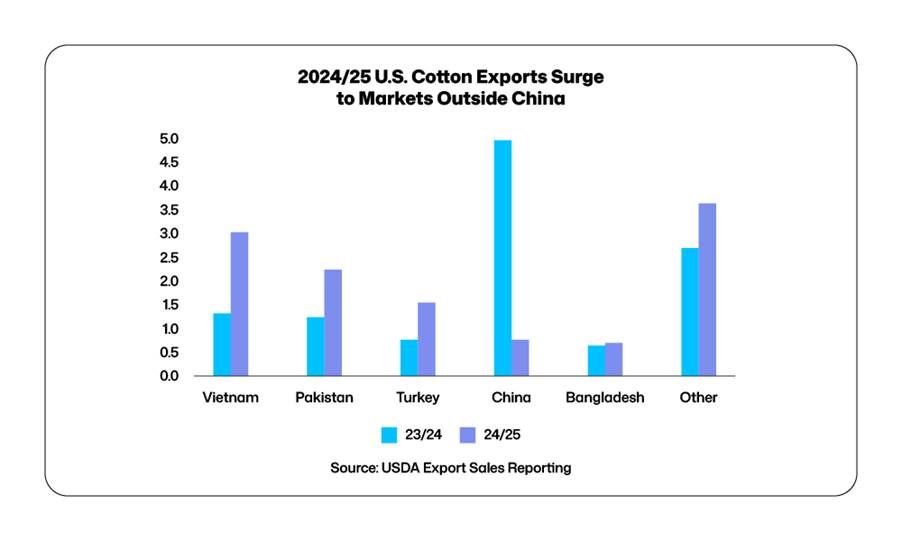
Joining the United States is Brazil, where there is a predicted 10% rise. However, Australia is an outlier as exports are set to fall in 2025/26, in line with its decreased production.
This increase in exports is facilitated by more countries looking to import cotton to up their textile production. Bangladesh and Vietnam are two such countries and are the leading cotton importers.
In total, global imports in 2025/26 are set to increase by more than 2 million bales as compared to the previous year.
Cotton vs Polyester
Cotton remains the natural fiber that is most in use for textile production. However, it lags significantly behind polyester when it comes to production.
For 2023, polyester accounted for 57% of total fiber production. By contrast, cotton came in at a distant second place with 20% (Textile Exchange)
With polyester production showing no signs of slowing down and cotton production only slowly picking up pace, this gap is only set to widen in the coming years.
Sustainability and the Rise of Organic Cotton
Sustainability is becoming one of the integral parts of the global cotton industry. It is assuming greater importance as conventional cotton production is becoming even more resource-intensive.
According to the ICAC, in 2025, cotton farming no longer uses the widely reported 2,000 liters of water per kg but 2,068 liters of water per kg. (ICAC) In such a scenario, organic cotton has emerged as an eco-friendly alternative.
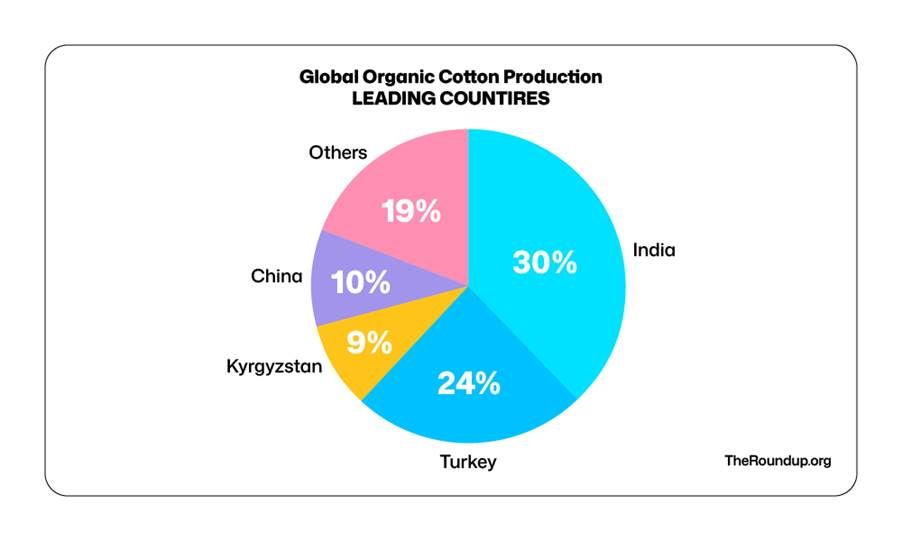
India leads the way when it comes to organic cotton production. Rising concerns over soil health, arable land, and water consumpytion have prompted increased organic cotton measures in the country. Turkey is not far behind.
The GDP Picture
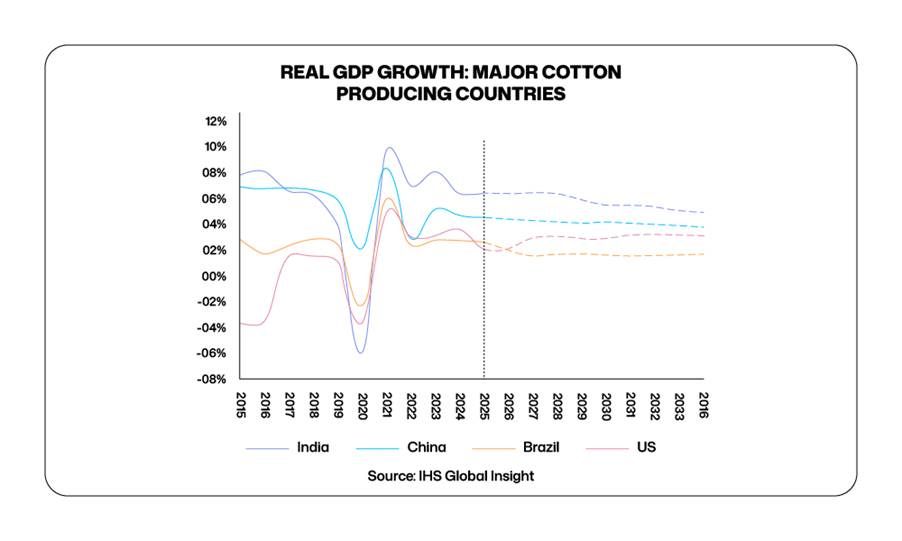
A strong GDP means more potential for cotton trade. The GDP projections of the major countries in the cotton trade paint a hopeful picture for the cotton industry over the coming decade.
Among the major countries, India is set to have the strongest growth, both in the short term and long term. The 2025 growth is estimated at 6.5%, while growth until 2034 is forecasted to be 5.8%.
Future of Cotton Harvesting and Yield
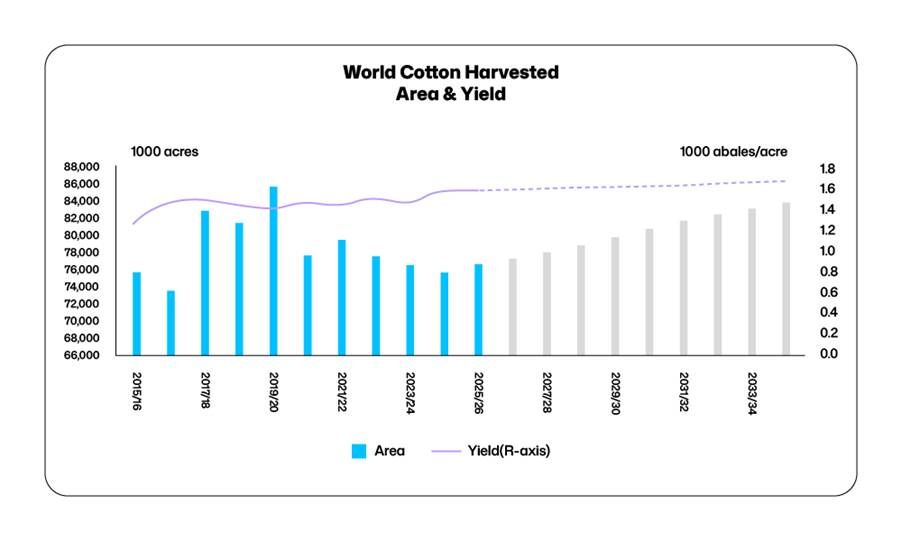
The area under cotton cultivation is estimated to keep climbing. For 2025/26, the area under cotton cultivation is put at 76.6 million acres but by the time 2034/35 rolls around, that is set to shoot up to 83.9 million acres.
There are also gains to be made in terms of yield. While current projections put 1.6 bales of cotton per acre, by 2034/35, this is set to increase to 1.7 bales per acre.
(Source: Texas Tech University)
Production Metrics in the United States
There is set to be considerably less area under cotton production in the United States than in the previous year. For the more common Upland cotton, 139,000 acres are predicted by the USDA to be under cultivation, the second lowest in more than a century.
The decrease is also expected for the more refined extra-long staple (ELS) cotton. The acreage is put at 171,000 acres in 2025/26, 36,000 less than the previous year.
Rising Names in Cotton Import
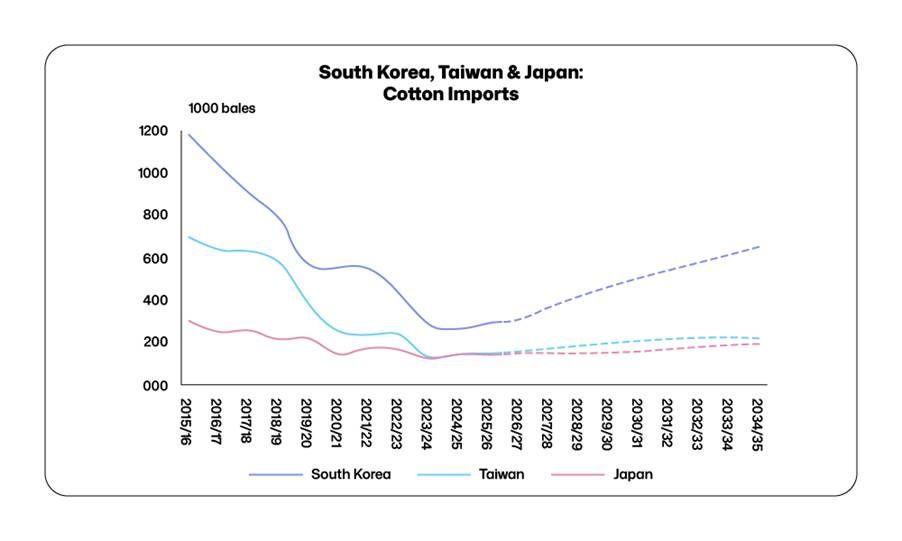
South Korea, Japan, and Taiwan are set to be some of the fastest growing cotton importers. One reason for this increased import activity is the relocation of many Chinese cotton mills to these three countries.
While the 2024/25 numbers stood at 0.6 million bales for these countries, by 2034/35 these numbers are set to shoot up to 1.1 million bales. Thus, cotton imports in these countries are set to nearly double.
(Source: Texas Tech University)
Hefty Cotton Imports into India
Cotton imports into India more than doubled in the 2024/25 year compared to the previous year, according to Reuters. The numbers are estimated to be 3.9 million bales by the end of September, heavily outpacing the previous year, when the number was 1.5 million bales.
These numbers are only set to grow in the 2025/26 season. In the first quarter of the season, ending December, the import number may exceed 2 million bales.
Country to Look Out For: Brazil
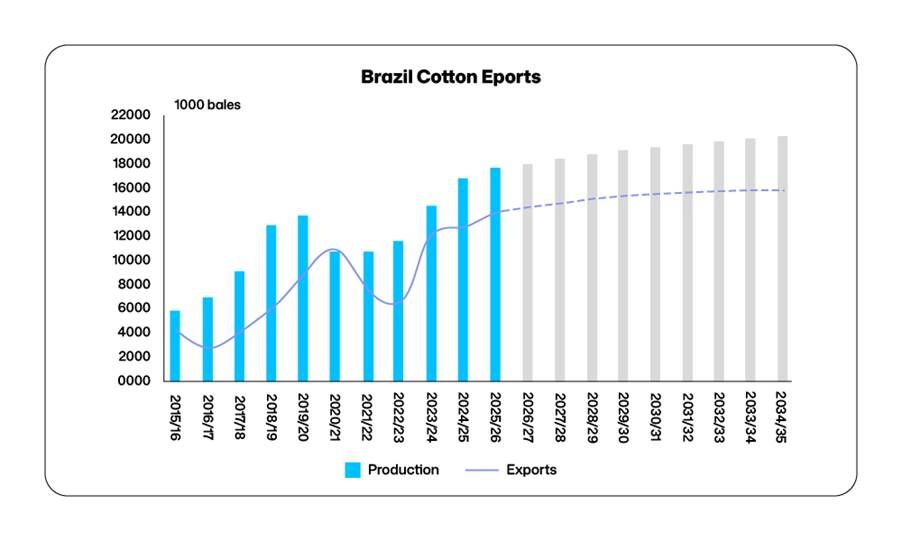
Brazil has overtaken the US to be the biggest cotton exporter in the world. Its position in the cotton industry is only going to strengthen over the next decade. By 2034/35, 31% of the cotton exports of the world are predicted to come from Brazil.
(Source: Texas Tech University)
Brazil is also set to have more of a share of total cotton production by 2034/35. By that date, with a 15% share, Brazil is expected to take over from the United States as the third largest cotton producer in the world.
(Source: Texas Tech University)
Impact of Tariffs
If there’s one thing that characterizes 2025 in the cotton industry, it is tariffs. The US has levied unprecedented tariffs of 50% on goods from Brazil and India, including cotton. There have also been stringent tariffs from the US on other major cotton-exporting countries like Vietnam, Pakistan, and China.
While the impact of tariffs on a global scale will only become gradually known, effects can already be felt. For instance, there was a decrease in apparel imported in the US in the second quarter of 2025, when the tariffs really took effect. In raw cotton equivalence, the decrease was nearly 6% (13.5 million bales in Q1 vs 12.7 million bales in Q2), according to Oxford Economics.
Impact of Tariffs on India
As the world’s second largest producer of cotton and a major supplier to the United States, the impact of tariffs on Indian cotton has huge reverberations in the industry. The United States accounts for nearly 29% of India’s US$ 38 billion textile export industry.
To make up for the expected shortfall, India is expected to increase its purchases of cotton grown domestically, through the Cotton Corporation of India (CCI).
"There is no limit or target for buying cotton from farmers in the new season. We will buy the entire quantity that farmers bring to CCI," said Lalit Kumar Gupta, managing director of CCI, to Reuters.
Price Graphs of a Few Cotton Fibers
Cotton prices vary according to staple length and the region where cultivation took place. Below, we present some graphs on a few cotton varieties, powered by Fibre2Fashion’s TexPro.
African Cotton
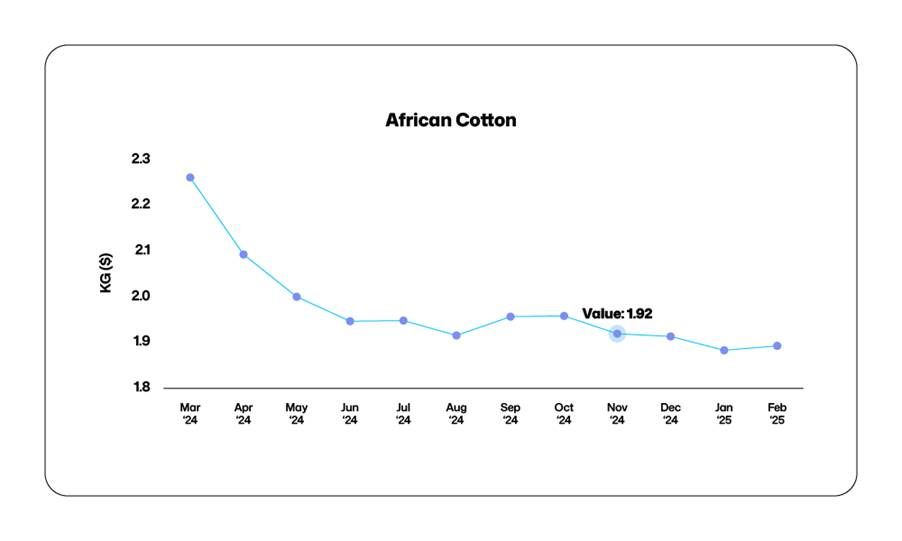
Between March 2024 and February 2025, African Cotton prices fell dramatically. On a CAGR level, the price decreased by -1.6%. Hence, the price fell by -16.18% in February 2025 as compared to March 2024.
Want up to date price info for African Cotton or other cotton varieties? Head over to Texpro for through price summaries.
(Source: Texpro African Cotton Bremen Index)
Supima Cotton
American Pima prices have gone through major fluctuations in the period from March 2024 to February 2025. However, the overall trend has been a downward one, with only some brief respites. As such, the price of Supima cotton decreased by -17.5% in February 2025 as compared to March 2024.
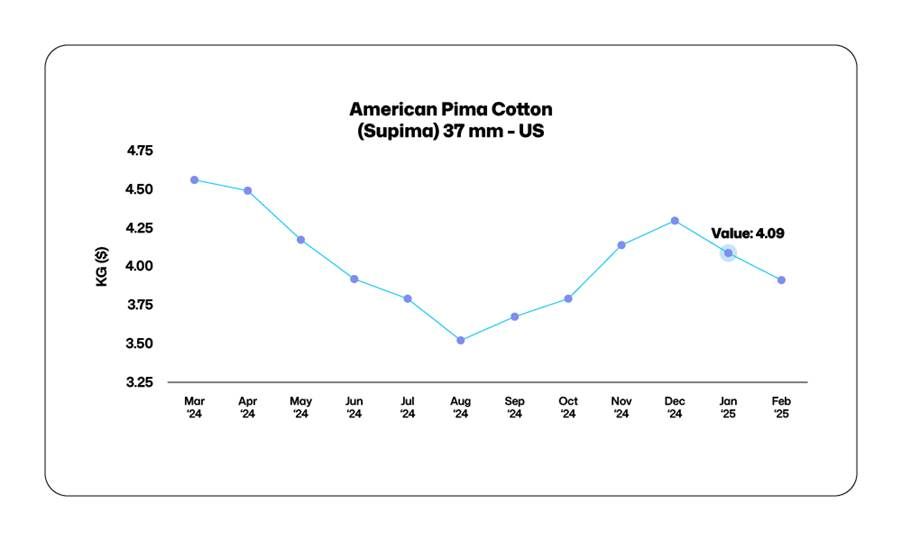
Source: Texpro American Pima Cotton Supima
Upland Cotton (East Texas-Oklahoma)
Upland Cotton may represent the antithesis of the ELS American Pima cotton, but its prices have been similarly falling. Rather, the decline here (for East Texas-Oklahoma) is even more severe, without even the brief up periods of Supima cotton. Hence, the February 2025 price reduced by -28.78% compared to the March 2024 price.
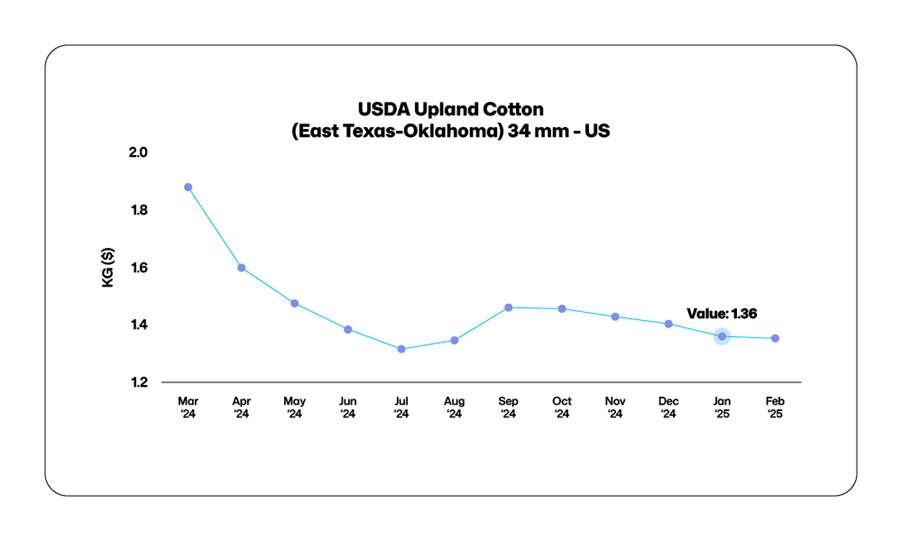
Source: USDA Upland Cotton
Recycled Cotton
As sustainability gains even more prominence in textile and cotton trade, there is more emphasis on material like recycled cotton. Like virgin cotton, recycled cotton prices have been falling too.
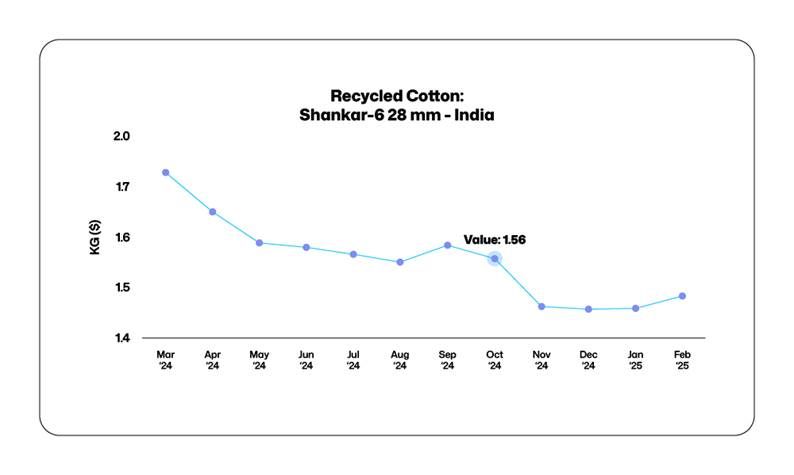
Source: Recycled Cotton
Conclusion
Cotton is a fragile market, made more so by recent tariffs and demand fluctuations. Industry stakeholders have to keep tabs on cotton prices, shipments, and news on the daily to develop a strategic advantage in the industry.
TexPro helps companies do just that, providing pricing updates (daily) for nearly 50 cotton fiber and yarn products. It simplifies the data-gathering process for companies and drives strategic decision-making without the need to consult multiple sources.
Begin your journey towards actionable cotton industry data today with TexPro!