BRAIN Biotech is engineering the future of sustainable textiles
BRAIN Biotech AG is a leading German industrial biotechnology company specialising in developing innovative enzyme, microbial, and bioprocess solutions for sustainable industrial applications.
With over 30 years of expertise, it bridges science and industry—offering end-to-end R&D, scale-up, and manufacturing services that help partners save time, reduce risk, and achieve commercial success through biological innovation.
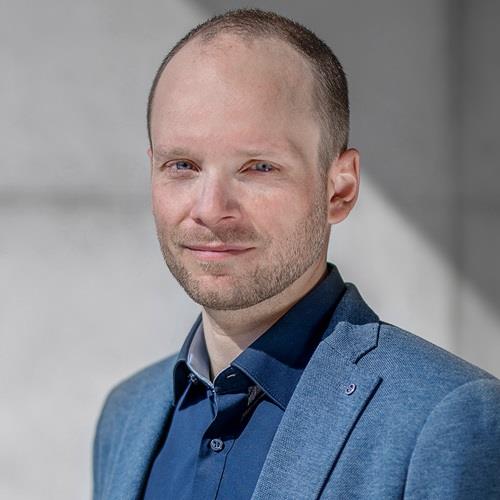
Fibre2Fashion spoke with the Vice President & Head of R&D, Dr Alexander Pelzer about how the company is driving industrial sustainability through biotechnology and how bio-based innovations—from natural dyes to waste-derived materials—are shaping the future of textiles and manufacturing.
BRAIN Biotech is known for bridging science and industry. How would you summarise your core mission and areas of expertise?
Our mission has always been the biologisation of industries—using the power of biology to create more sustainable solutions. In a world increasingly focused on environmental responsibility, biology offers the tools to replace conventional processes with smarter, greener alternatives.
BRAIN Biotech develops and optimises innovative biosolutions for a wide range of sectors, including food, pharmaceuticals, chemicals, and technical industries—essentially any field that can benefit from our biotechnology expertise.
At our Research & Innovation Centre in Zwingenberg, Germany, we draw on over 30 years of experience as a Contract Research Organisation (CRO), providing R&D services in enzyme technology, microbial strain engineering, and bioprocess development.
Our subsidiary, Biocatalysts Ltd, serves as a Contract Manufacturing Organisation (CMO) with cutting-edge facilities for enzyme production and supplies a portfolio of innovative enzyme products.
Together, under the brand BRAIN Biocatalysts, we deliver a complete solution—combining contract research, contract manufacturing, and advanced enzyme products for industrial applications.
What makes your enzyme and microorganism platforms unique compared to other biotechnology solution providers?
Our strength lies in a creative, challenge-driven approach—combining a broad and advanced technology portfolio in a modular way to deliver the most effective solution for each customer. The customer’s challenge is always at the centre; our route to the solution is versatile and science led.
One of our key innovations is MetXtra, an enzyme discovery platform that integrates a proprietary, highly diverse metagenome database with an AI-powered bioinformatics pipeline.
Over 99 per cent of MetXtra sequences are unique, giving our customers rapid access to innovation, freedom to operate, and strong intellectual property potential.
MetXtra also led to the development of CRISPR-BMC, our proprietary genome editing tool for microbial strain development.
This technology enables the targeted, efficient creation of production strains capable of generating biomolecules such as vitamins, fats, pharmaceutical precursors, and organic acids at high yields.
We use optimised enzyme production strains—including E coli, Bacillus, K phaffii, and A niger—to achieve exceptional enzyme yields.
Through our Plug & Produce systems, customers can even access our industrially validated production strains for their own manufacturing processes.
Close coordination with our production site in Cardiff, operated by Biocatalysts Ltd, ensures seamless transfer from development to manufacturing, enabling the rapid delivery of samples and commercial enzyme products.
Additionally, our extensive BRAIN Bioarchive houses ‘Value Strain Collections’—pre-characterised microorganisms for applications in food, cleantech, and recycling—supporting sustainable and circular production models.
Ultimately, BRAIN Biotech offers a true end-to-end service, guiding customers from discovery to market-ready solutions, ensuring innovation that is not only cutting-edge but also practical and commercially scalable.
How do you approach collaboration from research design to scaling industrial bioprocesses?
The collaboration begins with an initial exchange with our Business Development team, who offer tailored guidance on the most effective scientific strategies to meet each customer’s goals. This is followed by an in-depth technical consultation with our experienced scientists to determine the optimal technological approach.
During the joint project discussion, we present a detailed proposal outlining the scientific plan, commercial framework, and cost overview. Once both parties are aligned, we proceed to project planning—defining key phases and establishing clear go/no-go decision points to ensure transparency and accountability throughout the process.
Contract negotiations then finalise the commercial terms, depending on the strains and technologies involved. The process concludes with a signed agreement that aligns expectations and sets the foundation for a successful collaboration.
At BRAIN Biotech, mutual success is paramount. We ensure full transparency by sharing results, data, and materials throughout the project and providing a comprehensive scientific report upon completion.
What are some of the most exciting innovations or breakthroughs currently emerging from your R&D pipeline?
Technologically, a key milestone has been the discovery and development of CRISPR-BMC, our proprietary genome editing tool that enhances the efficiency of our microbial strain development pipeline.
CRISPR-BMC enables the rapid and targeted development of production strains tailored to customers’ specific needs—significantly reducing development time and costs. We also offer a licensing model for this technology, which has attracted strong interest from partners due to its favourable terms and flexibility.
Another exciting innovation is our fermentation technology, which allows raw materials to be converted into valuable products using specialised microorganisms. This sustainable approach is particularly effective when utilising waste or side streams, supporting circular production models. We maintain a diverse library of these microorganisms and can adapt them to create new, high-value products.
The technology is primarily applied in the food sector to produce novel foods from side streams, though it also offers potential for technical and industrial applications.
In addition, we are developing several innovative enzyme products designed to address specific challenges across multiple industries.
These projects are at various stages of progress—from early engineering to scale-up. They follow the success of enzyme products such as our recently launched microbial phospholipase A2 (Lipomod 833L2) for the egg processing market.
There is also significant progress in enzyme discovery and engineering, where the integration of AI is opening entirely new possibilities for innovation and optimisation.
How can enzyme or microbial technologies support cleaner, low-impact fibre and fabric processing in the textile industry?
Achieving true sustainability in the textile industry requires a holistic view of the entire manufacturing process. However, one of the greatest challenges remains consumer behaviour—particularly the culture of ‘fast fashion,’ which drives overproduction, excessive waste, and increased chemical pollution. While biotechnology alone cannot solve this systemic issue, it can make meaningful contributions towards more sustainable production and consumption.
Biotechnological applications in textiles are highly diverse. One key objective is to reduce or replace conventional chemicals with biologically derived alternatives.
For instance, textiles can be functionalised by incorporating engineered proteins directly into fibres, giving them desirable surface properties such as hydrophobicity or enhanced durability.
Microbially produced natural dyes and pigments also offer an environmentally friendly alternative to synthetic colourants, as they are biodegradable and pose minimal ecological risk if released into the environment.
Another innovative approach involves embedding beneficial microorganisms into fabrics, enabling them to suppress unwanted bacterial growth and prevent odour formation—essentially functioning like a ‘probiotic’ for textiles.
Beyond production, biotechnology can also extend the lifespan of garments. Enzymes used in washing processes can help repair or refine fabric surfaces, maintaining appearance and quality while reducing premature disposal.
Ultimately, the most sustainable textile is the one that does not need to be newly manufactured—and biotechnology provides valuable tools to help move the industry closer to that ideal.
Have you explored bio-based colourants or fermentation-driven dyes that could benefit textile manufacturers?
Artificial colourants and dyes are facing growing scrutiny, and public acceptance is steadily declining. In a significant development, the US Department of Health and Human Services and the Food and Drug Administration (FDA) have announced new measures to phase out all petroleum-based synthetic colourants and dyes.
BRAIN Biotech is well positioned to offer sustainable, bio-based alternatives. Our BRAIN Bioarchive contains a vast collection of naturally colour-producing wild-type microorganisms, many of which have already shown promising applications in personal care and textile sectors.
Beyond these naturally occurring strains, we also engineer optimised microorganisms that overexpress specific biosynthetic pathways to achieve industrially relevant yields of natural pigments. These tailored strains enable the large-scale production of biological colourants suitable for a wide range of industries—including textiles—offering a viable, sustainable replacement for synthetic dyes.
Can you share examples where BRAIN Biotech has worked with the fashion or material industries?
Certainly. One notable collaboration was with the advanced materials company AMSilk, where we customised and developed a recombinant, natural structural protein. From a sustainability perspective, this is an outstanding product—being a biodegradable, natural protein that supports the creation of high-performance, protein-based fibres for the performance materials and textile markets.
Our role focused on optimising the specific properties of these structural proteins for a variety of high-performance textile applications. Using bioinformatics and AI-driven tools, we predicted and modelled protein structures, applying our rational and targeted protein engineering workflows to enhance their functionality and performance.
How can your bioprocess expertise help upcycle textile or fibre waste into new bio-based materials?
Our expertise lies in developing enzymes and microorganisms that can act on a wide range of substrates—essentially, organic materials that they can convert into new products. Many animal- and plant-based textile wastes serve as excellent substrates for such processes. These materials can be degraded, functionalised, or rebuilt into new bio-based compounds through enzymatic or microbial synthesis.
The key lies in developing and optimising tailored biocatalysts—enzymes and microorganisms that are specifically adapted to convert textile-derived substrates into valuable bio-based products.
While enzymatic and microbial recycling strategies hold great promise, plastic-based textiles remain technically challenging. However, recent advances in enzymatic PET degradation have shown significant progress, suggesting that similar biocatalytic approaches could soon be adapted for textile recycling as well.
What role can BRAIN Biotech play in developing next-generation materials such as bio-polyesters or mycelium leather?
BRAIN Biotech can play a significant role in the development of next-generation, bio-based materials. Industrial biotechnology is fundamentally about creating biological solutions that outperform conventional approaches, and this is precisely where our expertise lies.
Mycelium leather is a particularly exciting example. We are working on a similar concept in another field—using the structural properties of fungal mycelium to create fibrous materials.
In the food sector, for instance, we apply the ‘single-cell protein’ approach, using microbial biomass (such as fungi) and optimised fermentation conditions to grow fibrous structures that mimic the texture of meat. The same principle can be transferred to technical applications, such as sustainable leather alternatives or bio-based polymers.
Ultimately, by harnessing and enhancing nature’s own materials and processes, we can develop innovative, sustainable solutions for industries seeking to reduce their environmental footprint while maintaining performance and quality.
Can enzymes replace conventional chemicals in textile pre-treatment, dyeing, or finishing processes?
Yes, enzymes can serve as effective and sustainable alternatives to conventional chemicals in various stages of textile processing, including pre-treatment, dyeing, and finishing.
Their main advantage lies in their ability to catalyse chemical reactions biochemically under mild, environmentally friendly conditions, often using only water as the reaction medium. This significantly reduces the need for harsh chemicals, energy, and water consumption.
However, natural enzymes are not always optimised for industrial environments. They may lack stability or activity under extreme conditions, such as high temperatures, unusual pH levels, or with non-natural substrates. This is where enzyme engineering and modern biotechnological tools become crucial.
Through targeted optimisation, enzymes can be tailored for specific industrial applications, enhancing their performance and robustness. As a result, engineered enzymes can now deliver impressive efficiency even under demanding process conditions—making them a viable and greener replacement for traditional chemical treatments in the textile industry.
Looking ahead, what trends in synthetic biology and bio-manufacturing will most influence industrial sustainability over the next decade?
Climate change is one of the biggest problems of our time. Every year, we exceed the planet's limits, threatening the stability of the ecosystem. Industrial production will have to become more sustainable, as we are already exceeding the planet’s boundaries and the world’s population will continue to grow. Manufacturing processes in the future will need to consume less energy and release fewer pollutants into the environment. In addition, during production or end-of-life, there should ideally be no waste streams, with everything flowing back into the cycle to conserve resources. Biotechnology will make a significant contribution.
One of the major trends is, of course, artificial intelligence (AI) and machine learning. This goes hand‑in‑hand with digitisation and the collection of extensive data sets across all areas of classical biotechnology, providing a strong data foundation for AI. It will be exciting to see where the field moves. We are not yet at the point where we can rely exclusively on AI, but the entire field will enable accelerated developments in synthetic biology.
For example, enzymes could be custom‑designed de-novo on a computer for a specific application. Microorganisms will be better understood and quickly engineered for targeted industrial use, whether as production strains or whole‑cell biocatalysts. Production processes will allow higher yields while conserving resources.
Enzymes and biocatalysis are already fundamental tools, and their significance is set to grow further in future.
Enzymes can catalyse chemical processes more efficiently and sustainably for a variety of applications. The challenge over the coming decade will be to replace established chemical processes with biocatalysis, which requires enzymes that can achieve even more than they do today. Our expanding knowledge, combined with digitisation and AI, will unlock even greater possibilities.
Beyond that, we will see an increasing number of biologically inspired industrial processes in the coming years, whether it is bio-based materials and chemicals, biological recycling, or upcycling of side and waste streams.