Strengthening Europe’s natural fibre ecosystem through innovation and traceability
For over seven decades, the Alliance for European Flax-Linen & Hemp has stood at the forefront of Europe’s natural fibre movement, uniting every link of the value chain—from farmers and scutchers to spinners, weavers, and brands—under a shared vision of innovation, transparency, and sustainability.
Representing over 10,000 businesses across 16 countries, the Alliance plays a pivotal role in advancing scientific research, strengthening traceability through certifications like Masters of Linen and Masters of Flax Fibre, and driving industrial-scale collaboration to make European-grown flax and hemp global benchmarks for responsible, high-performance materials.
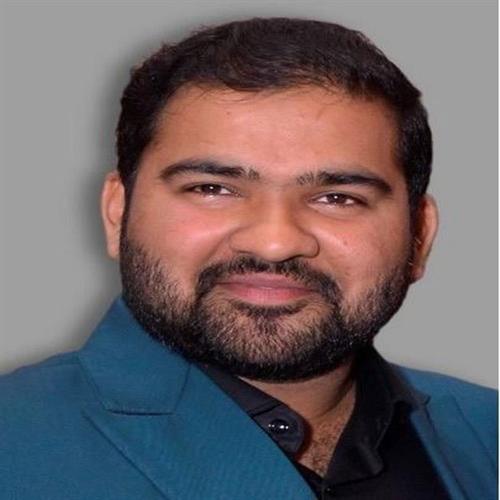
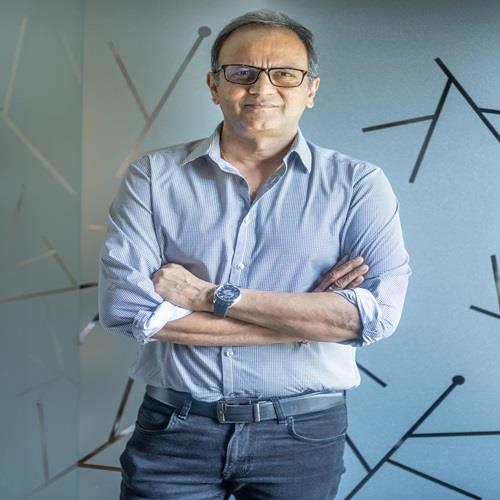
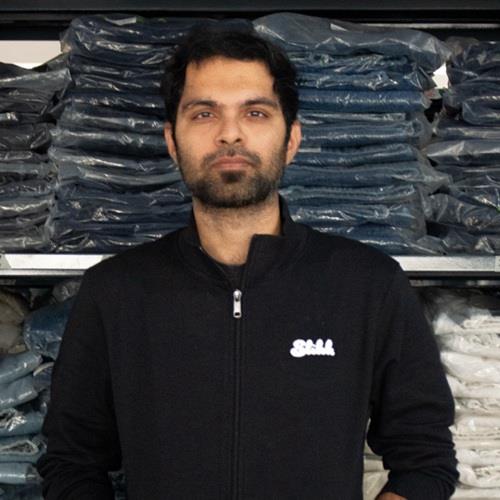
In conversation with Fibre2Fashion, Innovation Project Manager, Bruno Pech discusses how the Alliance is shaping the future of natural fibres through digital traceability, technological innovation, and collective action across sectors.
What inspired the founding of the Alliance for European Flax Linen & Hemp?
The Alliance for European Flax-Linen & Hemp was founded over 70 years ago on a vision of solidarity and collective strength within the marketplace. It set out to unite all stakeholders across the European flax and hemp value chain—from farmers to end users—under a shared pursuit of excellence.
Its founding mission focused on fostering dialogue with European authorities, building a competitive business environment, and harnessing the combined expertise of the sector.
At its heart, the Alliance was inspired by the belief that through collaboration and the diversity of its members, Europe’s flax and hemp industry could position itself as a global benchmark for premium, sustainable fibres.
How do you ensure traceability and transparency across your flax, linen, and hemp supply chains?
The Alliance and its collective structurally strengthen its certifications of origin through the evolution of the Masters of Linen and Masters of Flax Fibre by integrating digital traceability.
In 2020, as part of the Fashion and Luxury Sector Strategy Committee, the Alliance for European Flax-Linen & Hemp led a European pilot project on Linen, aimed at testing a digital traceability system.
The Alliance and the working group chose TextileGenesis to roll out the platform on a large scale. Using a secure blockchain system, the platform tracks all certified volume transactions, from scutching to branding, via Fibercoins tokens (for Masters of Flax Fibre).
It guarantees the origin of European fibres and certified volumes to avoid any risk of double counting.
How do you balance traditional cultivation methods with modern innovation?
Our members work tirelessly to maintain environmentally balanced cultivation—flax naturally enhances soil structure, serves as an excellent rotation crop, and requires minimal fertiliser. Alongside this, they continue to innovate in both farming and processing techniques.
We are also seeing significant R&D investments in fibre conversion, aimed at building a competitive local industrial advantage through advanced technologies that reduce production costs in collaboration with local machine manufacturers.
These efforts are helping to foster new businesses with higher production capacity and greater sustainability.
How are you addressing the growing global demand for eco-friendly textiles?
In summary, the industry is progressing along two key paths: producing better and producing more.
Producing better means addressing climate challenges through strengthened agronomic R&D and innovation, while continuously reducing inputs to create a more efficient agricultural process that also protects biodiversity.
Producing more involves meeting the growing demand for fibres by increasing production capacity in Western Europe, advancing innovations in scutching, exploring opportunities to expand cultivation areas, and supporting the development of a European textile hemp sector.
What are the key barriers to scaling hemp and linen production internationally, and what challenges exist in making hemp a mainstream textile fibre?
Key barriers include both technical and structural challenges. On the farming side, there is a lack of specialist machinery, limited processing facilities, and insufficient technical knowledge about traditional and modern techniques. Economic constraints—such as high startup costs from non-standard equipment, market volatility, and competition from synthetics—also hinder expansion.
Additionally, the supply chain remains relatively fragmented, with farmers, processors, spinners, and manufacturers often dispersed or even absent in emerging regions, making it difficult to coordinate large-scale production or maintain consistent quality.
Climatic factors further complicate scaling, as hemp and flax have specific growing requirements, limited suitable varieties, and weather-dependent retting processes that can restrict production regions.
How is the natural fibre industry addressing competition from recycled and bio-based synthetic materials?
This remains a significant challenge. Recycled and bio-based synthetics often dominate in terms of availability and cost, but interest in natural fibres is steadily growing as consumers seek genuinely low-impact solutions.
We focus on highlighting the intrinsic advantages of natural fibres—their biodegradability, lower carbon footprint, and renewable agricultural origins—which position them as complementary alternatives rather than direct competitors to recycled or synthetic materials.
How is the global demand for natural fibres like flax, linen, and hemp evolving compared to synthetic alternatives?
Natural fibres currently represent a much smaller share of the market compared to synthetics—with the combined flax, linen, and hemp markets estimated to be roughly three times smaller. However, we anticipate steady growth of around 5–7 per cent CAGR for natural fibres, potentially outpacing synthetics, even though they are starting from a smaller base as adoption continues to expand.
How do partnerships with farmers and scutching companies strengthen your value chain?
Partnerships between farmers and scutching companies strengthen the value chain by ensuring stable supply, consistent fibre quality, and standardised practices. These collaborations encourage shared investment in advanced equipment and processing facilities, while guaranteed purchase agreements help reduce financial risks for farmers.
Knowledge exchange is mutual—processors share technical expertise and market insights, while farmers contribute on-ground production knowledge, fostering innovation and traceability.
By uniting smaller producers, scutching companies enhance collective bargaining power and access to wider markets.
Together, these alliances create the infrastructure, scale, and resilience needed to compete with synthetic fibres and revitalise natural fibre production.
With Circular Structures joining the Technical Section, how do you see its expertise in sustainable material development accelerating the use of flax and hemp fibres in high-performance composites?
Circular Structures bring their huge expertise in engineering and the real-world application of flax-based composites to the Alliance. Their unique brands—Greenboats in marine and Greenlander in off-road mobility—have consistently showcased flax’s position as a leading technical fibre.
Their addition to the Alliance reinforces the technical depth of our organisation and strengthens our collective ability to meet industrial performance standards while reducing environmental impact.
The Alliance now brings together over 25 partners across the value chain. How important is this cross-sector collaboration in scaling sustainable fibre adoption at an industrial level?
It plays a crucial role in providing a comprehensive view of the flax and hemp value chain and in scaling sustainable fibre adoption at an industrial level.
By fostering an integrated ecosystem, it helps address fragmented infrastructure, bridge knowledge gaps, and drive market development that individual players cannot achieve alone.
This coordination enables joint investment in processing capacity, standardised quality systems, collaborative R&D, and unified promotion of European flax-linen and hemp’s sustainability credentials.
It also helps generate the scale of supply and demand required to rival synthetic fibres, ensuring complete traceability and integrity throughout the value chain.
How are sustainability certifications shaping buyer preferences in the textile industry?
They are becoming almost essential when demonstrating the benefits of adopting more environmentally friendly solutions. What was once considered a valuable addition—having a Life Cycle Assessment (LCA)—is now almost a requirement when introducing new materials or processes.
Across industries, there is a growing customer demand for lower-impact solutions, and flax and hemp play a key role in meeting these expectations.
What innovations in cultivation or processing are transforming the natural fibre sector today?
The natural fibre sector is being transformed by key innovations in both cultivation and processing. Equipment modernisation and investment in automated, low-energy technologies—such as hemp decortication centres, mechanical retting facilities, and scalable spinning operations—are crucial to lowering costs and improving supply reliability.
In parallel, advances in crop breeding are producing higher-yielding, more uniform fibre varieties that better meet industrial processing requirements.
Looking ahead, what strategic initiatives or research priorities will the Alliance focus on to further advance European-grown flax and hemp in innovative material solutions?
The Alliance will concentrate its strategic efforts on strengthening scientific collaboration and industrial innovation around European Flax-Linen and Hemp. Building on the establishment of the new European Scientific Council, which brings together complementary expertise in fibre science, materials engineering, and advanced manufacturing, the Alliance aims to accelerate the development of innovative, sustainable applications for these natural fibres.
Process Guide Project is the key initiative, designed as an entry gate to European Flax-Linen and Hemp composites manufacturing, which will provide a shared technical framework to support R&D alignment, facilitate technology transfer, and foster industrial adoption of bio-based materials across multiple sectors.